

We often tell ourselves a dangerous lie about money and happiness. We say that if we just had enough money, the stress would disappear. We convince ourselves that we wouldn’t need to bet if our bank accounts were full.
We assume that addiction is a problem born of scarcity. It feels like a desperate attempt to make ends meet. But this belief is biologically incorrect. The urge to gamble isn’t about the money you need. It is about the dopamine your brain craves.
When we look at the lives of the ultra-wealthy, we see this truth laid bare. Addiction does not discriminate based on talent, fame, or net worth. In fact, having unlimited resources often removes the natural brakes that stop a person from spiraling. It allows the addiction to burn hotter and longer.
If you are struggling right now, do not feel the weight of shame. Look at these stories to validate your struggle. If people with everything can lose control, it proves that this condition isn’t a weakness of character. It is a powerful biological mechanism that requires more than just willpower to defeat.
Here are the famous figures we will discuss. They have all battled the same urges you face today:
- Charles Barkley: The NBA legend who admitted to losing millions and took a public break to reset.
- John Daly: The golfer who shockingly discovered he had lost over $50 million through tax records.
- Michael Jordan: The icon whose legendary competitiveness bled dangerously into high-stakes betting.
- Ben Affleck: The Hollywood star whose skill at the card table masked a deeper compulsion.
- Gladys Knight: The Empress of Soul who spent a decade seeking solace in Baccarat.
The Myth of the “Smart” Gambler
We must dismantle a common misconception before diving into their histories. We often think that celebrities gamble because they can afford to lose. While they may have deeper pockets, the emotional and psychological toll is identical.
The brain of a celebrity processes a win or a loss exactly like yours does. The thrill of the risk releases dopamine. The inevitable loss triggers a crash that demands a fix. The only difference is the scale of the numbers.
Intelligence and success offer no protection against addiction. When we realize this, we can finally stop beating ourselves up for not being smart enough to quit. Recovery starts when we respect the power of the addiction.
Charles Barkley: The Transparency of Loss
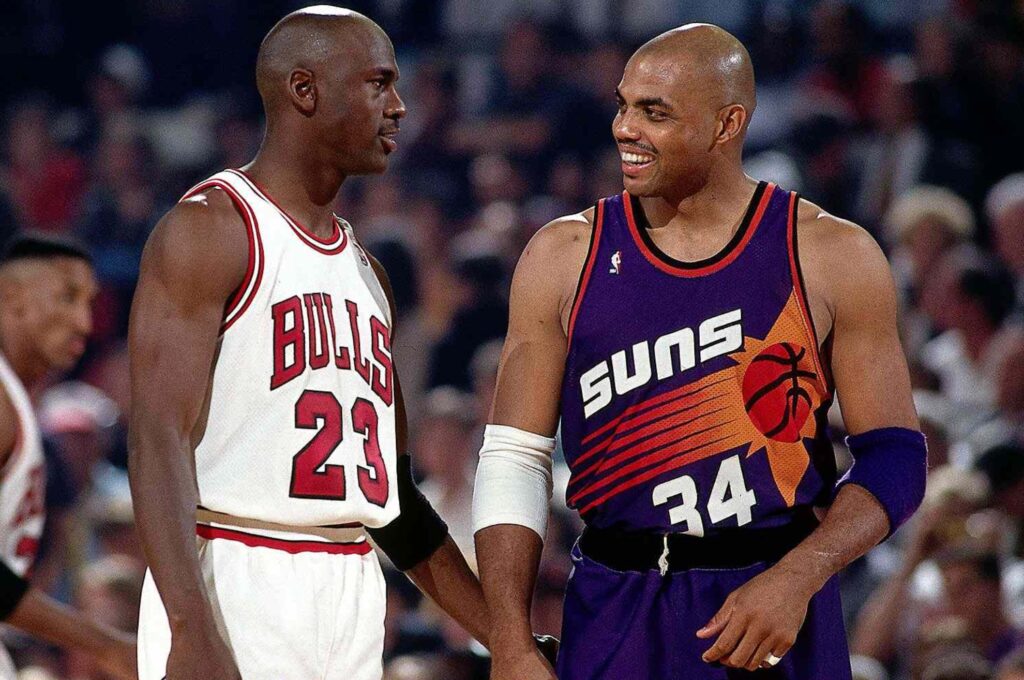
Charles Barkley is beloved for his unfiltered honesty. Fortunately for us, that honesty extends to his gambling struggles. Unlike many who hide their losses in the shadows, Barkley openly admitted his issues in interviews. He stated that his habit had cost him over $10 million. Estimates suggest the number is likely closer to $20 million.
For Barkley, the issue wasn’t just the money. It was the inability to regulate the switch. He spoke about going to Las Vegas with the intent to win a million dollars. This mindset almost guarantees a spiral. He wasn’t playing for entertainment. He was playing to conquer the house.
The Reality Check: Barkley’s story is crucial because he recognized the pattern. He admitted that he had a problem not because he went broke. He admitted it because he couldn’t stop even when he wanted to. He took a two-year hiatus from gambling to regain control of his life. His journey teaches us that you don’t have to hit absolute rock bottom to ask for help. You can identify the toxic behavior and stop it before it consumes your identity.
John Daly: Disconnecting from Reality

The story of professional golfer John Daly is perhaps the most staggering example of disconnection. Daly was a force of nature on the golf course. However, his lifestyle off the green was chaotic.
In his autobiography, Daly detailed a moment of horrifying clarity. He began reviewing his tax records to calculate his losses over a 15-year period. He expected the number to be high. He thought it might be around $20 million. The reality was a loss of roughly $55 million.
How does someone lose $55 million without realizing it? It happens the same way someone loses their paycheck on a Friday night. The chips, the digital credits, and the online numbers stop feeling like real currency. They become abstract points in a game. Daly’s experience illustrates the fog of addiction. We create a mental barrier between our actions and their consequences.
Breaking this fog is painful but necessary. Just as Daly had to look at the tax records, we must look at bank statements. We must reconnect with the reality of the loss to start the healing process.
Michael Jordan: Competition as a Trigger
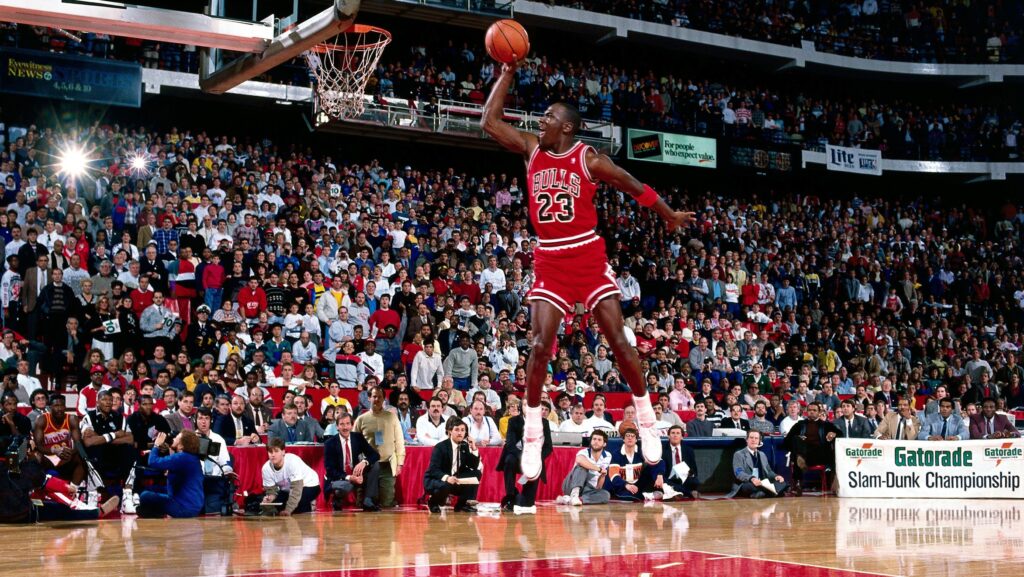
Michael Jordan is synonymous with the will to win. That intense competitive drive made him a billionaire athlete. But it also created a distinct vulnerability. For high-performers, the brain requires massive amounts of stimulation to feel normal.
Jordan’s gambling stories are legendary. They range from six-figure golf bets to marathon card sessions in Atlantic City. While Jordan has maintained that he never put his family in financial jeopardy, the behavior exhibits classic signs of tolerance. A standard game wasn’t enough. The stakes had to be astronomical to generate the dopamine hit he craved.
Jordan’s story validates the struggle of the bored brain. Many of us gamble not because we want money. We do it because normal life feels flat or dull. We use the risk to feel something. Recognizing that you are craving stimulation and not cash is a breakthrough in recovery. It allows you to look for healthier ways to engage your competitive spirit.
Ben Affleck: When Skill Becomes a Trap

Ben Affleck represents a different and dangerous side of gambling. He represents the illusion of control. Affleck is a highly intelligent and skilled card player. In 2014, he was famously banned from the blackjack tables at the Hard Rock Hotel in Las Vegas for counting cards.
For an addict, being good at gambling is often a curse. It reinforces the denial. It allows you to tell yourself that you are not like those other people. You convince yourself that you have a system or an edge. But addiction is not a game of skill. It is a game of endurance.
Affleck has been open about his struggles with addiction and has sought rehab multiple times. He understands that the compulsion eventually takes over your life. It does not matter if you are winning or losing in the short term.
The Reality Check: The house always wins because they have infinite time and capital. Even if you have the skill of Ben Affleck, the emotional fatigue will eventually lead to a mistake. Relying on skill to manage an addiction is like trying to put out a fire with gasoline. The only winning move is to exit the arena entirely.
Gladys Knight: The Emotional Escape

Gladys Knight is known as the Empress of Soul. She wrote candidly about her decade-long struggle with Baccarat. Unlike the hyper-competitive sports stars, Knight’s story is about emotional regulation.
She didn’t gamble for the rush of the win. She gambled for the silence. She described the casino table as a place where she felt protected. It was a place where the pressures of fame and life faded away into the rhythm of the cards. She once wrote that she spent $40,000 in a single night. She was not chasing a jackpot. She was chasing a feeling of numbness.
The Reality Check: This serves as a powerful mirror for many of us. We often use betting sites as a digital pacifier. We use them to numb anxiety, loneliness, or grief. Knight eventually quit after a realization that she was jeopardizing her family’s stability. This proves that emotional voids cannot be filled with financial risks.
Lessons for Your Own Recovery
Reading about these losses might feel heavy. But there is hope buried in these narratives. These stars are human. They fell into the trap and suffered the consequences. Yet many of them rebuilt their lives.
If you are ready to stop the cycle, take these lessons to heart:
- Validate your biology: Your brain is reacting to dopamine loops just like Michael Jordan’s did. You are fighting chemistry. You are not just making bad choices.
- Break the dissociation: Like John Daly, you must face the real numbers. Open the bank apps you’ve been avoiding. The truth hurts. But it is the solid ground you need to build on.
- Kill the skill myth: Ben Affleck proves that knowing the game doesn’t protect you. The only way to win is to stop playing.
- Use external brakes: Willpower is a muscle. It gets tired. You need tools that work when your willpower fails.
You do not have to lose $50 million to realize enough is enough. The amount doesn’t matter. The feeling of losing control is what matters. You have the power to rewrite your story starting today.
If you are struggling to resist the urge on your own, try LucidoApp to block access to betting sites and give yourself the crucial time needed to make a better choice.
